Machine Tool Makers Are Building in India: What Localised Manufacturing Changes for Buyers
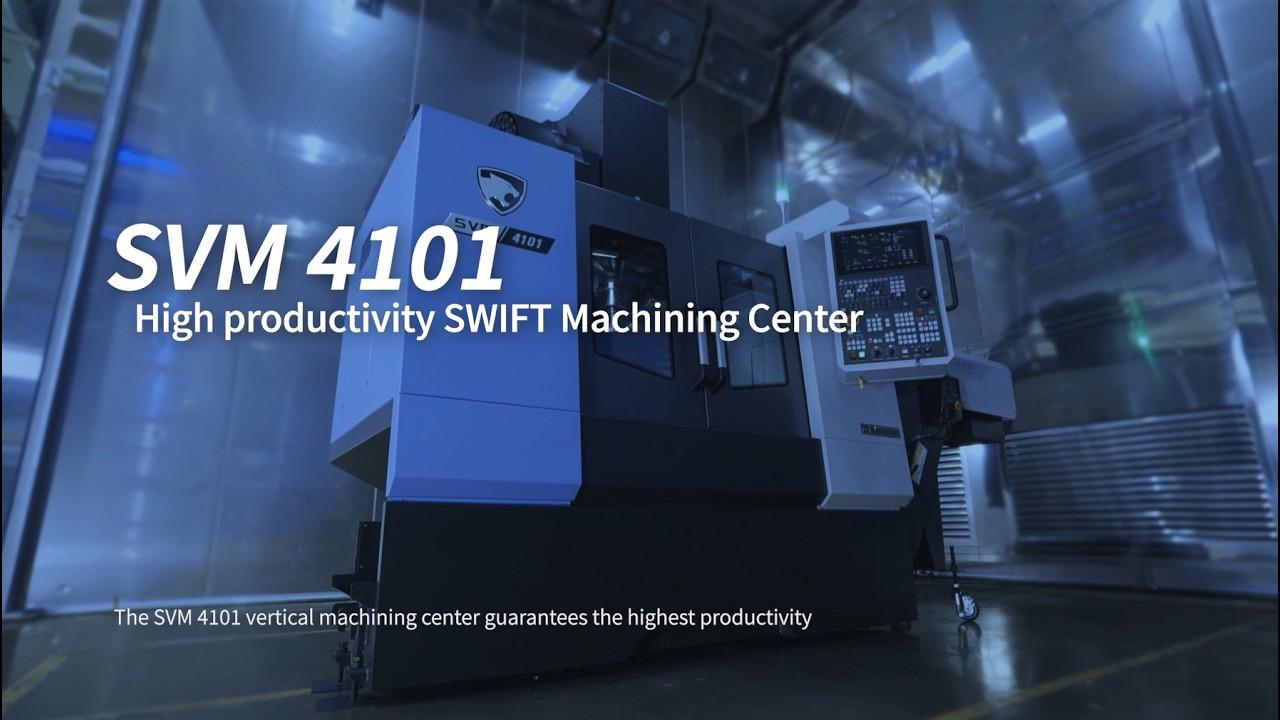
In the space of ten days, a Korean machine tool builder opened its first factory in India, a Japanese tool maker took ownership of a factory-fastening and industrial IoT business, and the EU set a date on which connected products start reporting their own vulnerabilities. Three unrelated headlines — and one direction of travel.
Industrial capability is moving closer to the customer, and the definition of “capability” is quietly widening from what a machine can cut to what a supplier can prove. For anyone buying engineering work in South Asia, both halves of that change the questions worth asking.
Ten days, three dated moves
| Date | What happened | Reported by | What it changes |
|---|---|---|---|
| Late Aug 2026 | DN Solutions opens its first manufacturing plant in India, in Bengaluru, on a reported ₹600 crore investment | AIM Network (c. 27 Aug); CNBC-TV18 (c. 2 Sept) | CNC machine tools built inside the region rather than shipped into it |
| 1 Sept 2026 | Makita Industrial Tools Corporation begins operations, taking over Panasonic Electric Works' power tools, factory and construction fastening equipment, and factory-oriented IoT | Panasonic Newsroom; Modern Distribution Management | Instrumented, traceable fastening becomes a mainstream tool category |
| 11 Sept 2026 | EU Cyber Resilience Act reporting begins: 24-hour early warning, 72-hour notification, 14-day final report | European Commission | Connected products carry a live obligation, including ones already sold |
| H1 2026 | US metalworking machinery orders reach $3.44 bn, a record by value since 1998, on fewer units | Metrology News, from AMT's USMTO series | Automation content, not machine count, is where the money is going |
Why a plant in Bengaluru matters more than a distributor in Bengaluru
Machine tool builders have sold into India for decades through importers and sales offices. Building there is a different commitment, and it changes three things a buyer actually experiences.
The first is lead time. A machine assembled in the region does not queue for a container slot, clear a port, or wait on a shipping line's schedule. For a workshop deciding whether to take on a contract that needs capacity in four months rather than nine, that is the whole decision.
The second is spares. Local assembly usually drags a local parts inventory behind it, because the plant itself needs one. A spindle bearing or a drive that used to be a three-week air freight becomes a regional stock item. Any shop that has had a machine down waiting on a part knows this is worth more than a discount on the purchase price.
The third is service radius — engineers who can be on site the same week, trained on the machine that was built down the road. That is the quiet advantage, and it is the one that does not appear on a spec sheet.
The scale of the move is worth stating carefully, because the two outlets covering it frame it differently. CNBC-TV18's report is headlined around a ₹600 crore investment in a first Indian manufacturing plant. AIM Network's, published a week earlier, is titled “South Korea's DN Solutions Opens First Overseas Factory in 23 Years in Bengaluru” — a claim about the company's history rather than about India. Both point the same way: this is not an incremental sales expansion.
The same week, the tool got a memory
The Makita announcement looks like a different story until you read what was bought. Makita did not need more cordless drills. What it acquired from Panasonic Electric Works was factory and construction fastening equipment and factory-oriented IoT — controlled-torque assembly tools and the data layer that turns each fastening operation into a record.
That is the same shift the machinery numbers describe from the other end. AMT's USMTO series shows American manufacturers spending a record $3.44 billion on metalworking machinery in the first half of 2026 while ordering fewer machines than in the previous six months. Money is going into capability per machine — automation, probing, in-process measurement — not into machine count.
A machine that measures the part it just cut and a tool that logs the torque it just applied are the same product decision. Both exist because the customer increasingly needs evidence, not just parts.
And then the evidence became a legal requirement
On 11 September, the EU's Cyber Resilience Act reporting regime starts. Manufacturers of “products with digital elements” must file an early warning within 24 hours of becoming aware of an actively exploited vulnerability, a full notification within 72 hours, and a final report within 14 days of a corrective measure being available.
The detail that reaches beyond software teams is scope. The obligation covers products already on the EU market, not only new ones — and “products with digital elements” is wide enough to include a connected machine, an instrumented tool or a controller with a network stack. A manufacturer who added a dashboard to a machine three years ago has taken on an obligation with a stopwatch on it.
Put the three together and the pattern is not subtle. Production is localising. Products are becoming instrumented. And instrumentation is becoming something you answer for.
What this means if you are buying engineering in Pakistan
Three practical consequences, none of them requiring anyone to buy a machine.
Ask where the machine was built, not just what badge it wears. Regional assembly is becoming a real differentiator in delivery and downtime, and it is a fair question to put to any supplier quoting machined work: what happens to my schedule when your machine goes down, and how long does the part take to arrive?
Expect traceability to be asked of you. Documented torque, in-process measurement records, material certificates — the requirements arriving through EU regulation and through instrumented tooling flow down supply chains. Export customers ask first. Domestic ones follow, usually within a couple of years.
Judge suppliers on latency, not on machine lists. As OEMs build internal capacity, the work that comes out to tender is increasingly the work that could not be scheduled internally: prototypes, short runs, recoveries. That work is won on how fast a real quote comes back and whether the date is met — which is a management property, not a capital one.
Where Vesprr sits in this
Vesprr runs three divisions out of Taxila for exactly this reason. Vesprr Workshop handles CNC turning and milling, certified welding, laser cutting and structural fabrication in-house, from a single prototype to a production run. Vesprr Tools stocks 2,943 genuine SKUs across five authorized-dealer brands — Toptul, Total Tool, Yato, Hoteche and Intough — so the tool a job needs is on a shelf in Pakistan rather than on a purchase order. Vesprr Software builds the IoT platforms, dashboards and automation that turn machine and tool data into something a customer can be shown.
That combination is deliberate. The three trends above are converging on suppliers who can make the part, hold the tooling and produce the record. Doing all three under one roof is the only way we know to answer a question that increasingly comes as one question.
Sources
- DN Solutions Bets Big On India With ₹600 Crore Manufacturing Plant In Bengaluru by CNBC-TV18 — the source for the ₹600 crore figure and the “first manufacturing plant in India” framing; cited from its title and published description, not from its contents.
- BIG MOVE: South Korea's DN Solutions Opens First Overseas Factory in 23 Years in Bengaluru by AIM Network — cited from its title and published description.
- Panasonic Newsroom press release, 1 September 2026 — completion of the power tools business transfer to Makita.
- Makita Launches Industrial Tools Subsidiary Following Panasonic Deal, MDM Staff, Modern Distribution Management, 4 September 2026 — scope of the acquired business, including factory fastening and industrial IoT.
- Cyber Resilience Act — Reporting obligations, European Commission — the 24-hour, 72-hour and 14-day deadlines and the Single Reporting Platform.
- U.S. Machine Tool Orders Reach Highest First-Half Level on Record, Metrology News, 14 August 2026, reporting AMT's USMTO data — the $3.44 billion half-year and the fall in units.
- Makita Corporation acquisition announcement.
- Division and catalogue figures from vesprr.com and tools.vesprr.com, checked 6 September 2026.
Have a part, an assembly or a platform that needs building? Vesprr Technologies covers machining, tooling and software from one place in Taxila. Get a free quote and tell us what has to be true by when — we will tell you whether we can hit it.